Love Marriage vs Arranged Marriage: Why Background Verification Matters in Both (2026 Guide)
One of the most common assumptions people make is that only arranged marriages require background verification. In reality, both love marriages and arranged marriages benefit from honest conversations, transparency, and responsible verification.
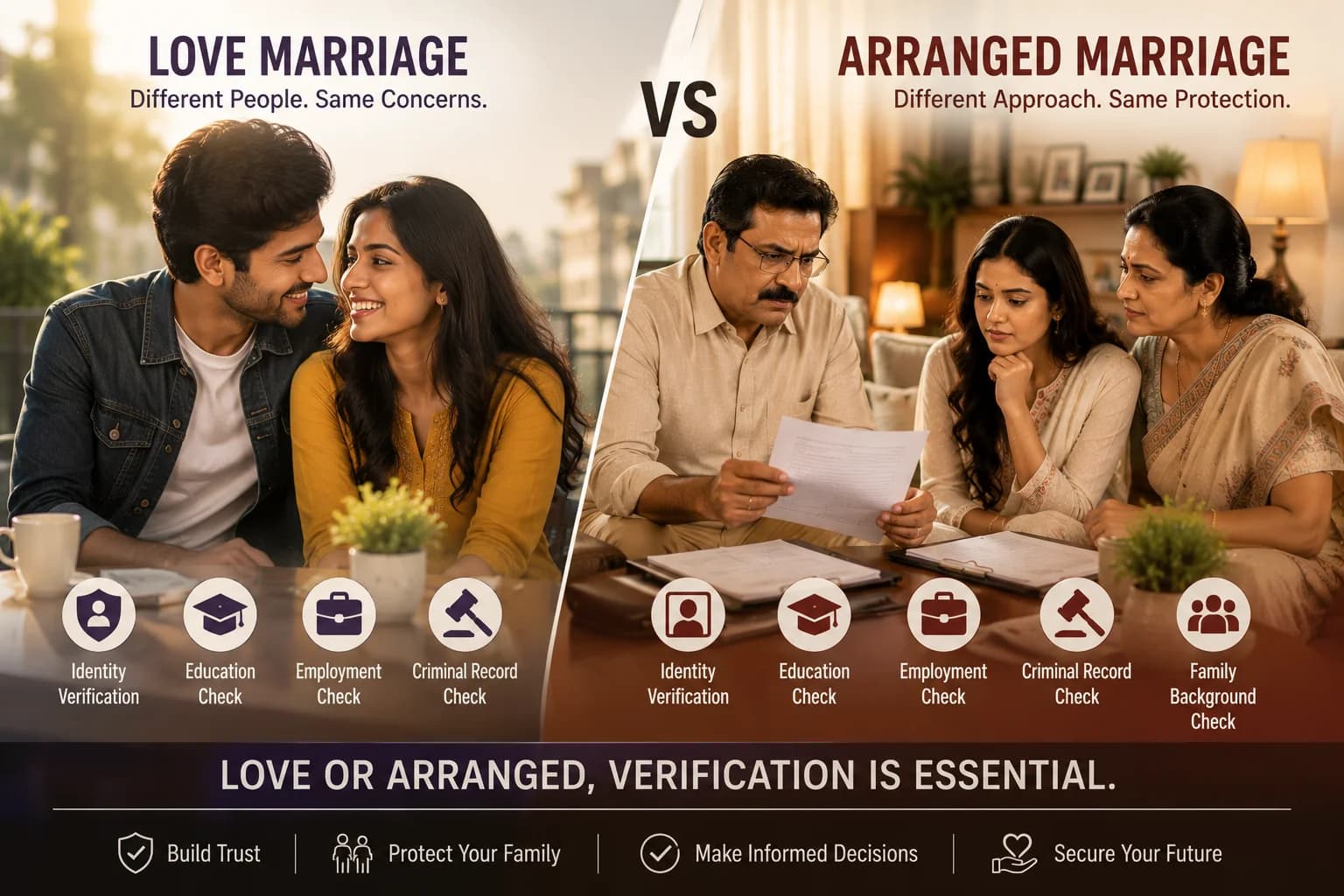
One of the most common assumptions people make is that only arranged marriages require background verification. Many believe that if two people have known each other for years, there is nothing left to verify.
In reality, both love marriages and arranged marriages can benefit from honest conversations, transparency, and responsible verification of important information.
Verification is not about questioning a relationship. It is about ensuring that both individuals are making one of life's biggest decisions with complete and accurate information.
Whether a couple met through family, friends, college, work, or a matrimonial platform, the principles remain the same: trust is strongest when it is supported by transparency.
Love Marriage vs Arranged Marriage: What Is the Difference?
In a love marriage, the couple usually knows each other before deciding to marry. They may have studied together, worked together, been friends, met through social circles, or connected online. This familiarity often creates a strong emotional bond. However, emotional closeness does not always mean every aspect of a person's life has been discussed.
In an arranged marriage, families usually introduce the prospective bride and groom. Several meetings take place before a decision is made, covering topics such as education, career, family values, lifestyle, and future plans. Because the families may not know each other well, verification is more commonly discussed.
The Biggest Myth About Love Marriages
Many people believe that after five years together, there is nothing left to learn. Unfortunately, that is not always true. People often discover important facts only after marriage, including existing financial liabilities, career changes, family responsibilities, different long-term goals, previous relationships that were never discussed, or lifestyle expectations.
The purpose of verification is not to uncover secrets. It is to ensure that important conversations have taken place before marriage.
Why Verification Matters in Love Marriages
Love naturally creates trust. However, important practical questions sometimes remain unanswered. Has the current employment situation changed? Is the career path exactly as understood? Have both partners openly discussed income, loans, investments, and future financial goals?
Financial compatibility is often just as important as emotional compatibility. Many conflicts arise from assumptions rather than genuine disagreements. Discussing expectations before marriage prevents most of them.
Marriage also brings two families together. Living arrangements, responsibilities toward parents, career expectations, and financial responsibilities should all be discussed openly before committing.
Why Verification Matters in Arranged Marriages
In arranged marriages, families usually have less time to know each other. Verification helps confirm information regarding identity, education, employment, address, publicly available records, and family background.
This allows discussions to focus on compatibility rather than uncertainty. When basic facts are confirmed, both families can invest energy in understanding values, expectations, and shared goals.
What Every Couple Should Discuss Before Marriage
Whether the marriage is arranged or based on love, every couple should openly discuss career goals, including where both partners see themselves in five years, whether both will continue working, and whether job transfers are expected.
Financial transparency is equally important. Monthly income, existing loans, savings, investment philosophy, and household budgeting should be discussed before marriage rather than after.
Family responsibilities including caring for parents, living arrangements, cultural expectations, religious practices, and family traditions deserve honest conversation. Long-term goals such as where to live, whether to have children, and how to balance career and family build understanding before challenges arise.
Common Red Flags for Both Types of Marriage
Regardless of how the relationship began, pay attention if you notice avoiding important conversations, contradictory information, reluctance to introduce family members, pressure to rush the marriage, financial secrecy, unclear career history, or frequent changes in personal information.
A red flag is not proof of dishonesty. It simply indicates that further discussion may be helpful before proceeding.
Verification Is About Transparency
Verification does not mean assuming someone is dishonest, invading privacy, or replacing trust. Verification means confirming important facts, encouraging transparency, helping families make informed decisions, and reducing avoidable misunderstandings.
Trust grows stronger when expectations are clear and both partners enter marriage with the same understanding of each other's lives.
A Practical Pre-Marriage Checklist
Before finalising the marriage, consider discussing or verifying: identity, education, employment, career plans, financial responsibilities, family expectations, living arrangements, marital status, future goals, and lifestyle compatibility.
This checklist applies equally to love marriages and arranged marriages. The conversations look different depending on how the couple met, but the underlying questions are the same.
Final Thoughts
Love and trust are essential foundations of every successful marriage. But trust should never discourage honest conversations.
Whether your marriage is arranged or based on years of friendship and love, taking the time to discuss expectations and verify important information can create a stronger beginning.
Marriage is one of life's biggest commitments. Making that decision with openness, transparency, and clarity benefits both partners and both families.
Ready to get verified?
Start with the Parichay tier at ₹9,999 — identity and criminal record verification in minutes.
Comments
No comments yet. Be the first.