Why Gen Z Is Scared of Marriage in India: 10 Real Reasons Nobody Talks About
Gen Z is not rejecting marriage. They are rejecting uncertainty. Here are 10 real reasons young Indians are approaching marriage with greater caution, and what families can do about it.
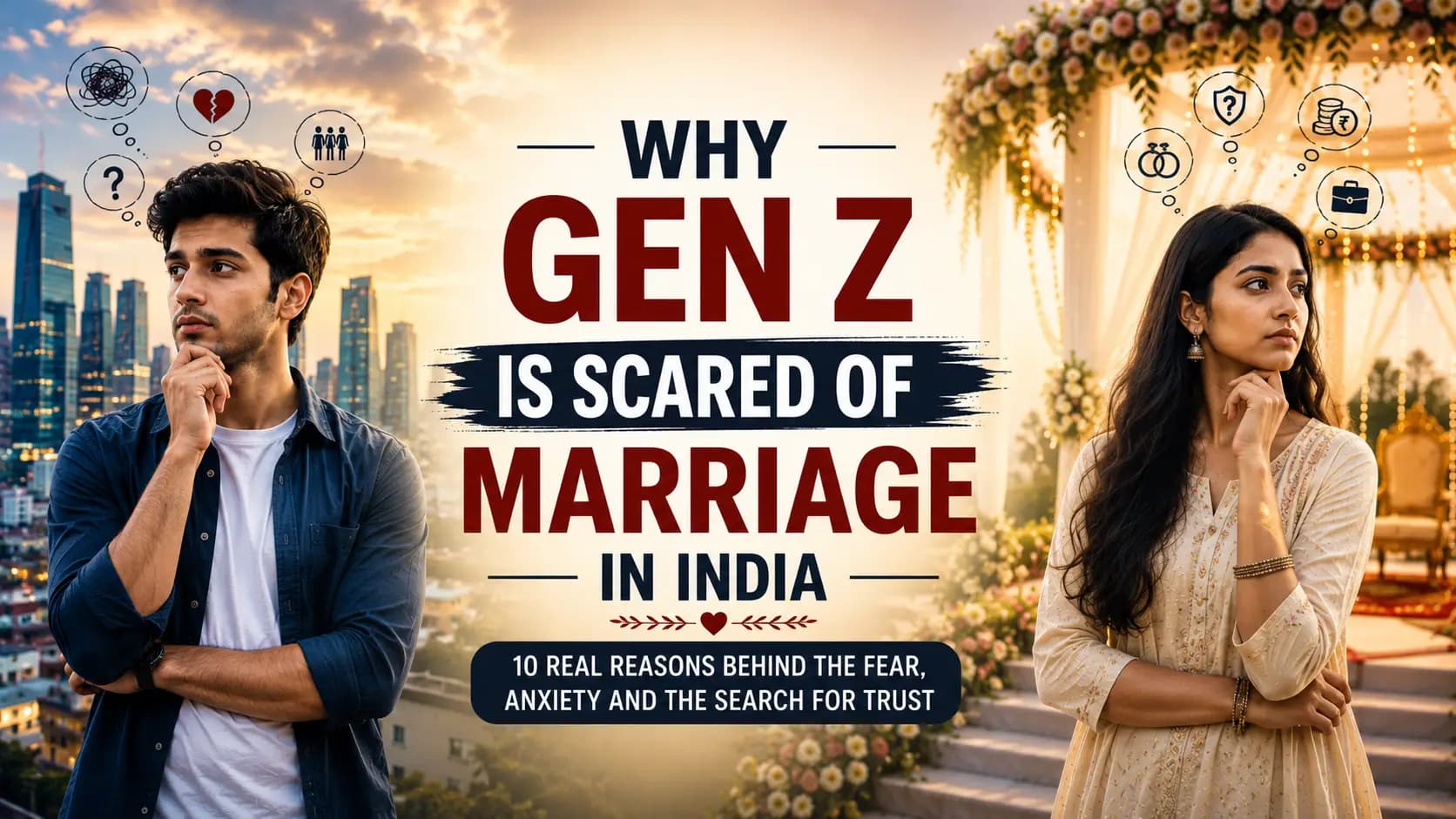
Marriage Is Not Dying. Trust Is.
For generations, marriage in India was built on familiarity. Families often lived in the same city, relatives knew one another, and community networks acted as an informal layer of trust.
Today, that world has changed. People meet through matrimonial websites, dating apps, social media, professional networks, and mutual connections spread across different cities and even countries. While these platforms have expanded opportunities, they have also introduced uncertainty.
This shift has created a growing concern among young adults. Many people are not rejecting the idea of marriage itself. Instead, they are questioning whether they truly know the person they are planning to marry.
That difference matters. The fear surrounding marriage today is less about commitment and more about trust.
Is Gen Z Really Avoiding Marriage?
A common belief is that Gen Z does not believe in marriage anymore. The reality is more nuanced.
Many young Indians still want meaningful, long-term relationships. However, they are approaching marriage with far greater caution than previous generations.
Unlike earlier generations, they have grown up witnessing divorce, financial fraud, emotional manipulation, domestic abuse, hidden debt, fake online identities, and relationship scams, through both personal experiences and constant exposure on social media.
Every week, news headlines and viral posts reinforce the message that appearances can be misleading. As a result, many young adults now ask questions that previous generations rarely considered.
- Is this person being honest?
- Are they hiding financial problems?
- Is their job genuine?
- Have they disclosed their past truthfully?
- Can I trust what I see online?
1. Trust Has Become Harder to Build
In the past, trust often came from community. Parents knew each other. Neighbours shared information. Relatives had known the family for years.
Today, many marriages begin between two families who have never met before. One family may be in Delhi, another in Bengaluru, while the prospective bride or groom works abroad.
Without shared social circles, verifying basic information becomes difficult. The result is uncertainty. Trust, once inherited through community, now has to be built intentionally.
2. Matrimonial Scams Have Increased Public Awareness
The internet has made finding a life partner easier. Unfortunately, it has also made deception easier.
Cases involving fake employment claims, hidden marriages, undisclosed debt, fabricated salaries, identity fraud, and financial exploitation regularly make headlines. While these cases represent a small percentage of marriages, they receive significant public attention.
Psychologically, people remember negative stories more vividly than positive ones. A single viral case can influence thousands of families who begin wondering whether something similar could happen to them.
3. Social Media Creates Unrealistic Expectations
Every day, people are exposed to carefully curated versions of other people's relationships. Perfect vacations. Perfect anniversaries. Perfect weddings. Perfect couples.
Real relationships rarely look like social media. Constant comparison creates anxiety and unrealistic expectations.
Many young adults fear making the wrong decision because they compare real people with carefully edited online lives.
4. Financial Pressure Has Changed Marriage
Marriage today involves far greater financial complexity than it did twenty years ago. Financial compatibility has become almost as important as emotional compatibility. Yet finances are often discussed late in the relationship, creating uncertainty.
- Education loans
- Home loans
- Credit card debt
- Career stability
- Lifestyle expectations
- Future financial goals
5. Careers Often Come Before Marriage
Many Gen Z professionals spend years building careers before considering marriage. They relocate frequently, work remotely, change companies, travel internationally, and delay long-term commitments.
By the time marriage becomes a priority, they have become accustomed to independence. Marriage now represents a significant life decision rather than a default next step. That naturally raises the standard of trust they expect.
6. Nuclear Families Mean Less Informal Verification
Earlier, families often relied on relatives or community members who already knew the prospective bride or groom. Today, these informal verification networks have weakened.
Parents frequently know very little beyond what is shared through conversations and online profiles. This creates an information gap. The less information people have, the greater their uncertainty becomes.
7. News Travels Faster Than Ever
One marriage fraud story can now reach millions of people within hours. Social media platforms amplify extraordinary cases because they attract attention.
Although successful marriages remain far more common, negative stories dominate public discussion. This creates what psychologists call an availability bias: people estimate risk based on memorable examples rather than actual probability.
As a result, many families perceive marriage as riskier than ever, even when the actual rate of fraud remains low.
8. People Want Transparency, Not Blind Trust
Blind trust was once considered a virtue. Today's generation prefers informed trust.
They read reviews before buying products. They compare hospitals before surgery. They verify employers before accepting jobs. They research neighbourhoods before purchasing homes.
Marriage, one of the most important decisions of life, naturally invites the same level of thoughtful consideration. Seeking transparency does not indicate distrust. It reflects responsibility.
9. Parents and Children View Risk Differently
Parents often focus on family values, traditions, and compatibility. Young adults may prioritise financial transparency, emotional maturity, career goals, and personal values.
Both perspectives are valid. The challenge is that neither side always has enough verified information to make confident decisions. Better conversations begin when facts replace assumptions.
10. Trust Needs Better Tools
The way marriages begin has changed dramatically. The methods used to establish trust have not. Families still rely heavily on conversations, references, and intuition.
These remain valuable, but they may not always provide a complete picture. Modern relationships require modern approaches to transparency.
Verification should never replace conversations, shared values, or emotional connection. Instead, it should complement them by helping families confirm important information before making lifelong commitments.
Does Being Careful Mean You Fear Marriage?
Not at all. There is an important difference between fear and caution. Fear prevents action. Caution encourages informed decisions.
Gen Z is not necessarily afraid of marriage. Many are simply unwilling to enter one without confidence. That confidence comes from communication, honesty, and transparency.
How Can Families Build Trust Before Marriage?
Strong marriages begin long before the wedding ceremony. Some healthy ways to build confidence include:
- Have open discussions about finances.
- Discuss future career plans.
- Talk about family expectations.
- Be transparent about important life events.
- Verify essential information when both individuals agree.
The Future of Marriage Is Transparency
Marriage has always depended on trust. What has changed is how trust is established.
Previous generations relied on communities. Today's generation often relies on technology. Tomorrow's generation will likely rely on a combination of honest conversations, mutual transparency, and consent-based verification.
The goal is not to create suspicion. The goal is to remove uncertainty. When two people willingly choose openness, trust grows naturally. That foundation is far stronger than one built on assumptions alone.
Final Thoughts
If there is one lesson from today's changing marriage landscape, it is this: Gen Z is not running away from marriage. They are running away from uncertainty.
The institution of marriage remains deeply meaningful to many young Indians. What they seek is confidence that the person they are choosing is genuine, transparent, and willing to build a relationship based on honesty.
Marriage has evolved with society. The way we build trust must evolve too. Transparency is not the opposite of love. In many ways, it is where lasting love begins.
Frequently Asked Questions
Why is Gen Z scared of marriage?
Many young adults worry about trust, financial compatibility, hidden information, changing social expectations, and the increasing visibility of relationship and matrimonial fraud cases. These concerns often reflect caution rather than opposition to marriage.
Are young people giving up on marriage?
Not necessarily. Surveys and social trends suggest many still value marriage but are taking more time to find the right partner and seek greater transparency before making a lifelong commitment.
Why do parents worry more about marriage today?
Families often know less about prospective matches because people meet online or live in different cities. Traditional community-based trust has become less common, making it harder to verify information informally.
How can trust be built before marriage?
Open communication, discussions about finances and life goals, family involvement, and mutual, consent-based verification of important information can help build confidence without undermining trust.
Is verifying information before marriage a sign of distrust?
Not when approached respectfully and mutually. Verification should support transparency and informed decision-making rather than replace communication or emotional connection.
Ready to get verified?
Start with the Parichay tier at ₹9,999 — identity and criminal record verification in minutes.
Comments
No comments yet. Be the first.