Why Parents Are More Worried About Marriage Today Than Ever Before
Parents are not afraid of marriage itself. They are afraid of not knowing enough. Here is why modern families feel more anxious before saying yes, and what truly helps.
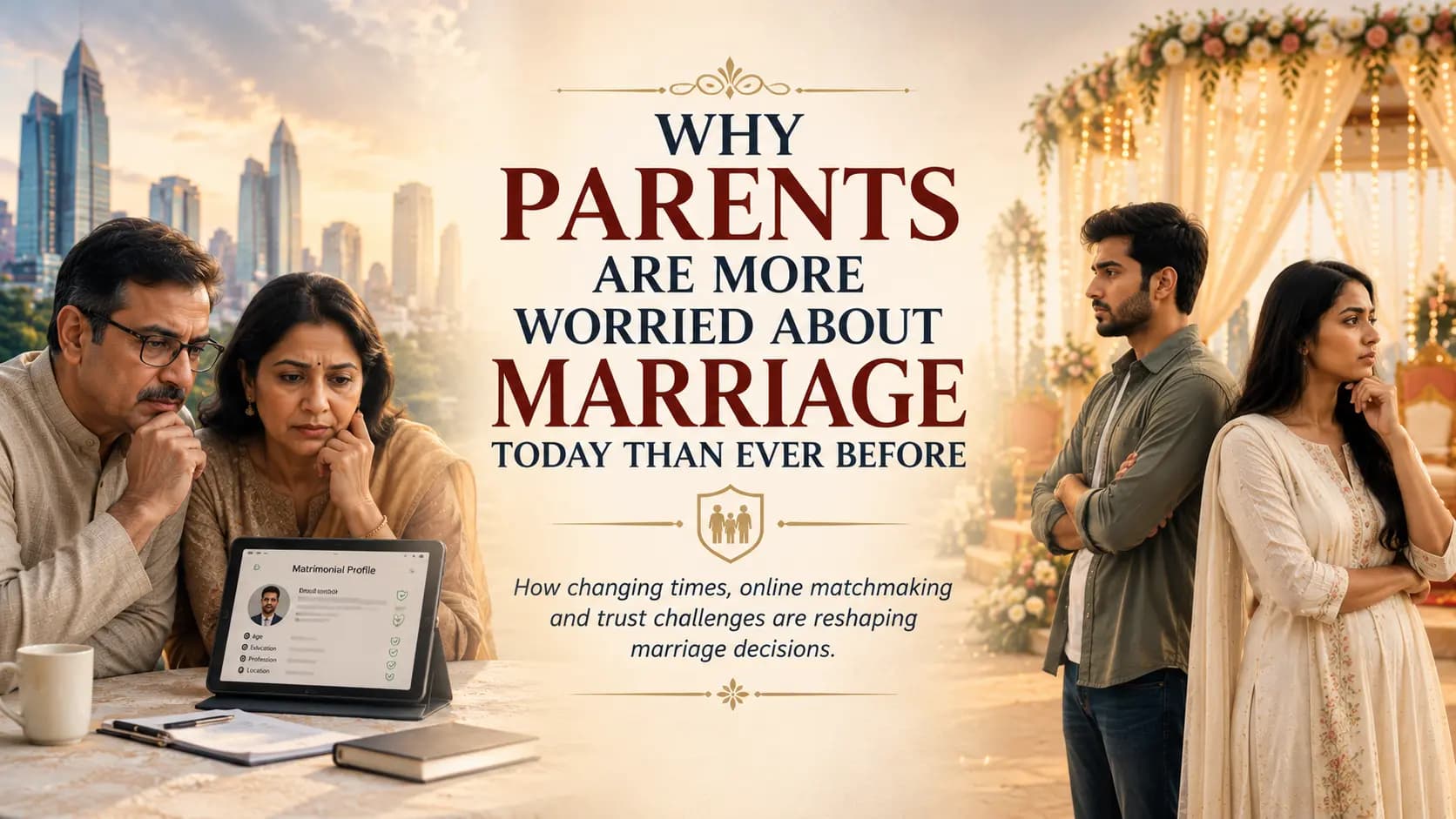
Marriage Has Changed More in the Last 20 Years Than in the Previous 100
Twenty years ago, finding a suitable life partner was largely a community-driven process.
Families knew each other through relatives, neighbourhoods, schools, workplaces or social circles. Even when two people had never met, someone usually knew someone who knew the other family.
Today, that landscape has transformed.
Young adults study in one city, work in another, and often meet prospective partners through matrimonial websites, social media, professional networks or dating apps. Families are expected to make one of life's biggest decisions with far less shared history than previous generations.
It is no surprise that many parents feel more anxious than ever.
This does not mean marriage has become unsafe. It means that the traditional ways of building trust no longer work as effectively in a digital-first world.
Parents Are Not Afraid of Marriage
Many headlines suggest that marriage is becoming less popular. That is only part of the story.
Most parents still believe marriage is an important milestone. What has changed is their confidence in the information they receive before saying yes.
The biggest concern today is not whether their son or daughter should marry. It is whether they truly know the person joining their family.
That uncertainty has become the source of anxiety.
1. Families No Longer Know Each Other
In previous generations, marriages often happened within the same city, community or extended family network.
Parents could quietly ask trusted relatives about another family. Neighbours had known them for years. Teachers, colleagues or local business owners could often provide genuine insights.
Today, that network rarely exists. One family may live in Jaipur, another in Bengaluru, while the bride or groom works in Dubai or London.
Without common connections, parents have fewer ways to build confidence.
2. Online Matchmaking Has Expanded Choice and Increased Uncertainty
Digital platforms have transformed matchmaking. Families now have access to thousands of potential matches across India and abroad.
More choice is undoubtedly beneficial. However, greater choice also means interacting with people who may have no shared social history.
Profiles often present achievements, photographs and career details, but families naturally wonder how much of that information has been independently confirmed.
The issue is not that online platforms are unreliable. It is that online interactions require stronger methods of establishing trust.
3. Matrimonial Fraud Has Become a Real Concern
Stories involving fake employment, hidden debt, undisclosed marriages, financial deception and identity fraud receive significant media attention.
Although these incidents represent a small fraction of marriages, they have changed how families think about risk.
Parents increasingly ask practical questions rather than signs of suspicion:
- Is the employment genuine?
- Has everything important been disclosed?
- Are financial claims accurate?
- Is there anything we do not know?
4. Social Media Shows Only Part of the Story
A well-curated social media profile can create a strong first impression. However, parents understand that online profiles rarely reveal the complete picture.
Photos cannot show financial responsibility. Professional achievements do not always reveal personal values. Followers do not measure honesty.
Many parents appreciate social media as a way to learn about interests and personality, but they know it should not be the only source of information before marriage.
5. Financial Stability Matters More Than Ever
Marriage today involves long-term financial planning. Parents naturally think about career stability, existing loans, credit obligations, future goals and lifestyle expectations.
These conversations were often simpler in previous generations because careers and financial responsibilities were less complex. Today, transparency around finances helps families make informed decisions.
- Career stability
- Existing loans
- Credit obligations
- Future goals
- Lifestyle expectations
6. Nuclear Families Have Reduced Community Support
Joint families once acted as an informal verification system. Older relatives often recognised family names, knew backgrounds or had long-standing community relationships.
As urbanisation increased, many of these networks weakened. Parents now make decisions with less informal knowledge than previous generations enjoyed.
7. Children Have Greater Independence
Young adults today make more personal decisions than ever before. They choose where to study, where to work and often who they wish to marry.
Most parents welcome this independence. However, they also want reassurance that important decisions are based on complete and accurate information.
Their concern is rarely about control. It is about ensuring their children enter marriage with confidence.
8. Expectations Have Become More Complex
Earlier generations often focused on family reputation and basic compatibility. Today's discussions include many additional topics:
- Career ambitions
- Work-life balance
- Location preferences
- Lifestyle choices
- Family responsibilities
- Financial planning
- Mental and emotional compatibility
9. Trust Now Needs More Than Conversation
Meeting over tea remains valuable. Family discussions remain important. References from relatives still matter.
But modern marriages frequently involve families who begin as complete strangers. Conversations reveal intentions. Transparency helps confirm facts.
Together, they create stronger trust than either approach alone.
10. Good Parents Want Confidence, Not Control
Parents are sometimes criticised for asking too many questions. In reality, most are simply trying to protect their children.
They have invested decades in raising their son or daughter. Naturally, they want reassurance before supporting one of life's biggest commitments.
Their questions are usually motivated by care rather than distrust.
The New Challenge Is Building Trust Without Damaging Relationships
Many families struggle with a difficult question: how do you verify important information without creating suspicion?
Traditional approaches often leave families with two uncomfortable options. One is to rely entirely on trust and hope everything shared is accurate. The other is to conduct investigations without the knowledge of the prospective bride or groom.
Neither approach is ideal. A relationship built on openness deserves a process that encourages transparency rather than secrecy.
Why Transparency Matters More Than Ever
Healthy marriages are built on honesty. Transparency allows both individuals to begin their relationship with confidence rather than uncertainty.
When important information is willingly shared, conversations become easier. Families feel reassured. Prospective partners understand each other's expectations more clearly.
Most importantly, trust grows through openness instead of assumptions.
What Modern Parents Really Want
Despite changing times, parents' goals have remained remarkably consistent. They want their children to marry someone who is honest, responsible, respectful, financially transparent, emotionally mature, and committed to building a healthy relationship.
Technology has changed how people meet. These values have not changed.
- Honest
- Responsible
- Respectful
- Financially transparent
- Emotionally mature
- Committed to building a healthy relationship
Looking Ahead
Marriage continues to be one of the most meaningful decisions a family makes. What has evolved is the environment in which those decisions happen.
Communities are larger. Families are more geographically dispersed. Digital interactions are common. Information travels faster than ever.
In this new reality, trust requires new tools alongside traditional wisdom.
Parents are not asking for certainty because they doubt marriage. They are asking for confidence because they value it.
The strongest marriages begin with honest conversations, mutual respect and a willingness to be transparent from the very beginning.
Why are parents more worried about marriage today?
Parents often know less about prospective matches than previous generations because people meet online, work in different cities and have fewer shared community connections. This makes building trust more challenging.
Are arranged marriages becoming less safe?
Arranged marriages remain a successful path for many families. However, changing social dynamics mean parents increasingly value transparency and verified information before making important decisions.
Why do parents ask so many questions before marriage?
Parents generally want to ensure compatibility, financial stability, honesty and long-term wellbeing. Their questions are usually intended to protect their children rather than interfere in their choices.
How can families build trust before marriage?
Open communication, discussions about finances, career goals, family expectations and mutually agreed transparency regarding important information can help build stronger confidence before marriage.
Ready to get verified?
Start with the Parichay tier at ₹9,999 — identity and criminal record verification in minutes.
Comments
No comments yet. Be the first.