Why Self-Verification Builds More Trust Than Background Checks
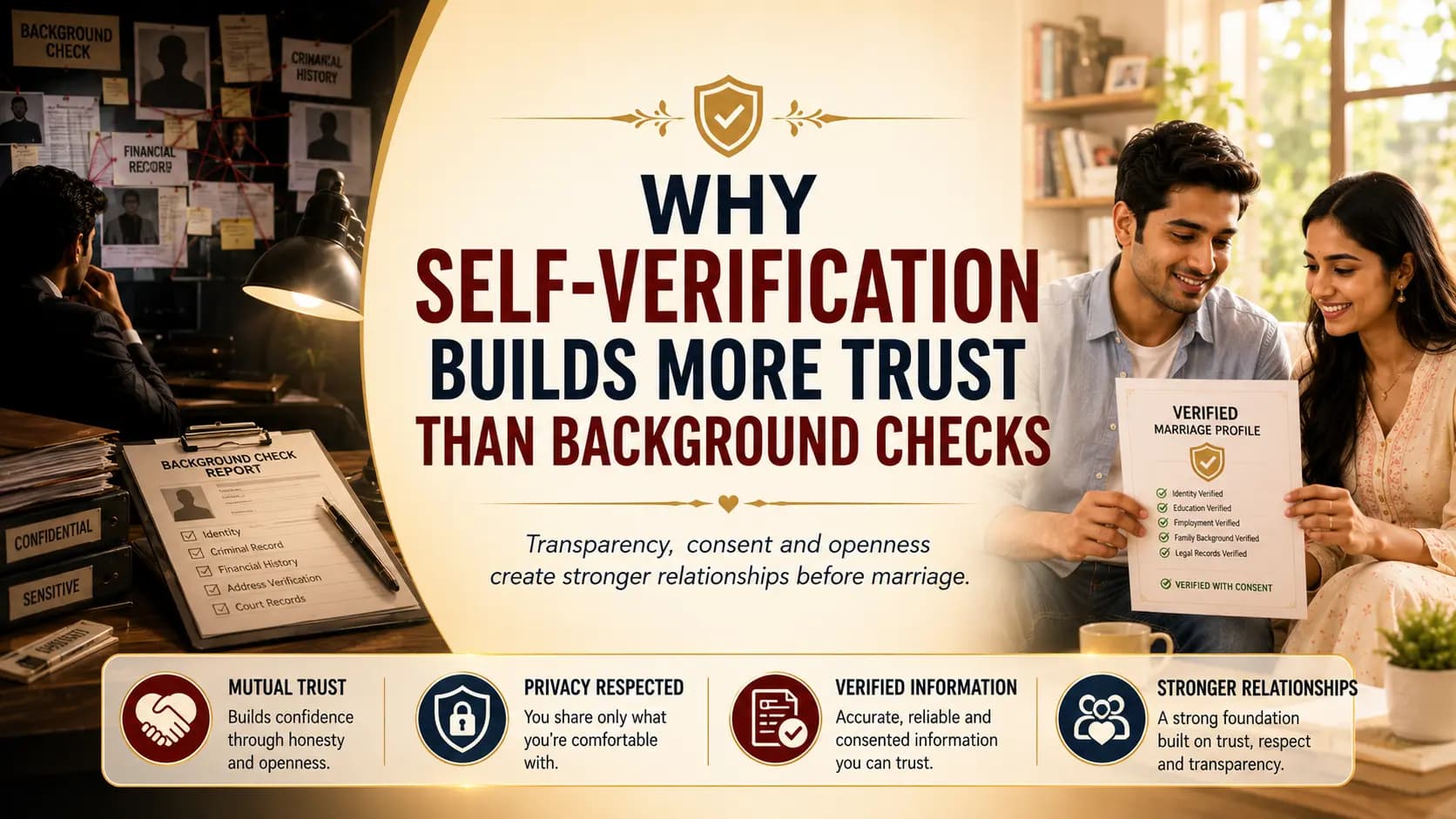
Background checks collect information about someone. Self-verification invites both people to choose honesty together. One builds a file. The other builds a foundation.
The Strongest Relationships Don't Begin With Suspicion
Marriage begins with a simple promise. Two people decide they are willing to spend their lives together.
Before that promise is made, however, there is usually one important question: can I trust this person?
For generations, families answered this question through conversations, references and community connections. As society changed, many turned towards background checks and private investigations to gain confidence.
These approaches may provide information. But do they actually create trust?
Not always. Trust is rarely created by discovering information about someone. It is created when people willingly choose to be transparent with each other.
That is why self-verification is emerging as a more thoughtful way to build confidence before marriage.
Information and Trust Are Not the Same Thing
Many people assume that the more information they collect, the more they can trust someone. Real life is more complicated.
Consider two situations. In the first, someone secretly investigates their future partner, receives a detailed report, and the partner never knows it happened.
In the second, both individuals voluntarily verify important information and openly discuss the results together.
Which situation is more likely to build trust? The second. Because trust does not grow from secrecy. It grows from openness.
What Is Self-Verification?
Self-verification means choosing to verify your own important information and sharing it voluntarily with the person you plan to marry.
Rather than waiting for questions or investigations, you demonstrate honesty from the beginning.
Depending on mutual agreement, self-verification may include:
- Identity
- Education
- Employment
- Address
- Publicly available legal records
- Professional credentials
- Other mutually agreed information
Why Background Checks Feel Different
Traditional background checks often happen without the knowledge of the individual being checked. Even when they are legal, they can create an imbalance.
One person gathers information. The other person knows nothing about the process.
If this later becomes known, the relationship may begin with uncomfortable questions: "Why did you not ask me directly?" and "Why did you not trust me enough to have an honest conversation?"
These reactions are understandable. Relationships depend on communication as much as information.
Transparency Creates Psychological Safety
One of the most important ingredients in healthy relationships is psychological safety. It means both people feel comfortable being honest without fearing unnecessary judgement.
Self-verification supports this environment because it encourages conversations such as: "I want to be transparent with you" and "I have verified my information because I believe honesty matters."
These conversations strengthen relationships before marriage rather than testing them.
Trust Is Built Through Reciprocity
Healthy relationships are balanced. Neither person should feel they are carrying all the responsibility.
Self-verification naturally creates reciprocity. Instead of one person being investigated, both individuals participate equally. Both demonstrate honesty. Both answer important questions. Both contribute to building confidence.
This mutual participation strengthens respect.
Openness Reduces Assumptions
Many relationship problems begin with assumptions rather than facts. Someone assumes income has been exaggerated. Someone assumes educational qualifications are different from what was claimed. Someone assumes financial obligations have not been disclosed.
Assumptions create anxiety. Transparent verification replaces assumptions with clarity.
That allows families to spend less time worrying about unknowns and more time discussing compatibility.
Trust Cannot Be Forced
One important misunderstanding about trust is that it can be demanded. It cannot. Trust is earned.
It develops gradually through consistent behaviour. Self-verification contributes to this process because it represents a voluntary decision.
Nobody is forced. Nobody is secretly investigated. Instead, individuals choose openness because they value the relationship they hope to build.
Modern Relationships Need Modern Trust
People verify many important decisions today. They verify employers before accepting jobs. They verify sellers before making expensive purchases. They verify reviews before booking hotels.
Marriage is one of the most significant decisions a person will ever make. It is reasonable to seek confidence before making such an important commitment.
The difference lies in how that confidence is built. Confidence achieved through transparency feels very different from confidence achieved through secrecy.
Self-Verification Encourages Better Conversations
Verification is only one part of preparing for marriage. It also creates opportunities for deeper discussions.
Couples often become more comfortable talking about financial planning, career ambitions, family responsibilities, health disclosures, living arrangements and future goals.
These conversations are often far more valuable than any report. Verification confirms facts. Communication builds understanding. Both are essential.
Families Benefit Too
Parents naturally want reassurance. Their concerns usually come from care rather than suspicion.
When transparency becomes part of the process, parents can focus less on investigating and more on supporting their children.
This changes the emotional tone of marriage discussions. Instead of wondering what might be hidden, families can discuss shared values, expectations and compatibility.
Self-Verification Respects Dignity
Every person deserves to be treated with dignity. Self-verification recognises this principle.
It does not assume guilt. It does not treat someone as a suspect. Instead, it invites participation.
That distinction matters. Respect shown before marriage often becomes respect carried into marriage.
What If Someone Refuses?
Some readers naturally ask: what if the other person refuses to verify anything?
A refusal does not automatically indicate dishonesty. People may have concerns about privacy, data security or simply feel uncomfortable with the idea.
Rather than jumping to conclusions, the refusal should become the beginning of a conversation. Ask questions. Understand the concerns. Discuss expectations openly.
How two people handle this discussion may reveal more about their compatibility than the verification itself.
Verification Does Not Replace Character
Verification can confirm certain facts. It cannot measure kindness. It cannot predict loyalty. It cannot guarantee a successful marriage.
Qualities such as empathy, patience, communication and mutual respect remain the true foundations of long-term relationships.
Verification should support these qualities, not replace them.
The Future of Trust Before Marriage
Marriage is changing. People meet differently. Families live farther apart. Digital interactions are becoming the norm.
As these changes continue, trust will increasingly depend on transparency rather than assumptions.
Self-verification reflects this shift. It respects privacy while encouraging openness. It supports informed decisions without creating unnecessary suspicion.
Most importantly, it reminds us that trust is strongest when both people actively choose to build it together.
Final Thoughts
Background checks answer one question: what can we discover?
Self-verification answers a different question: how can we begin this relationship with honesty?
That difference is more significant than it first appears.
Marriage is not built on investigations. It is built on communication, respect and transparency.
When two people willingly choose openness before marriage, they lay a foundation that extends far beyond verified documents. They begin creating the trust that every successful marriage depends upon.
What is self-verification before marriage?
Self-verification is a voluntary process where an individual verifies agreed information, such as identity, education or employment, and shares the verified results with a prospective partner. The goal is to promote transparency and informed decision-making.
How is self-verification different from a background check?
A traditional background check is often conducted by someone else and may occur without the individual's direct participation. Self-verification is initiated and shared by the individual, making it a more transparent and collaborative approach.
Does self-verification guarantee a successful marriage?
No. Verification can confirm certain facts, but it cannot predict compatibility, communication or long-term relationship success. It should be viewed as one part of a broader process of getting to know each other.
Should both people participate?
Mutual participation is generally the most balanced approach. When both individuals voluntarily share verified information, it reinforces fairness, transparency and mutual respect.
Is self-verification replacing conversations?
No. Honest conversations remain essential. Self-verification complements those conversations by helping confirm important information, allowing couples and families to focus more on compatibility and shared goals.
Ready to get verified?
Start with the Parichay tier at ₹9,999 — identity and criminal record verification in minutes.
Comments
No comments yet. Be the first.